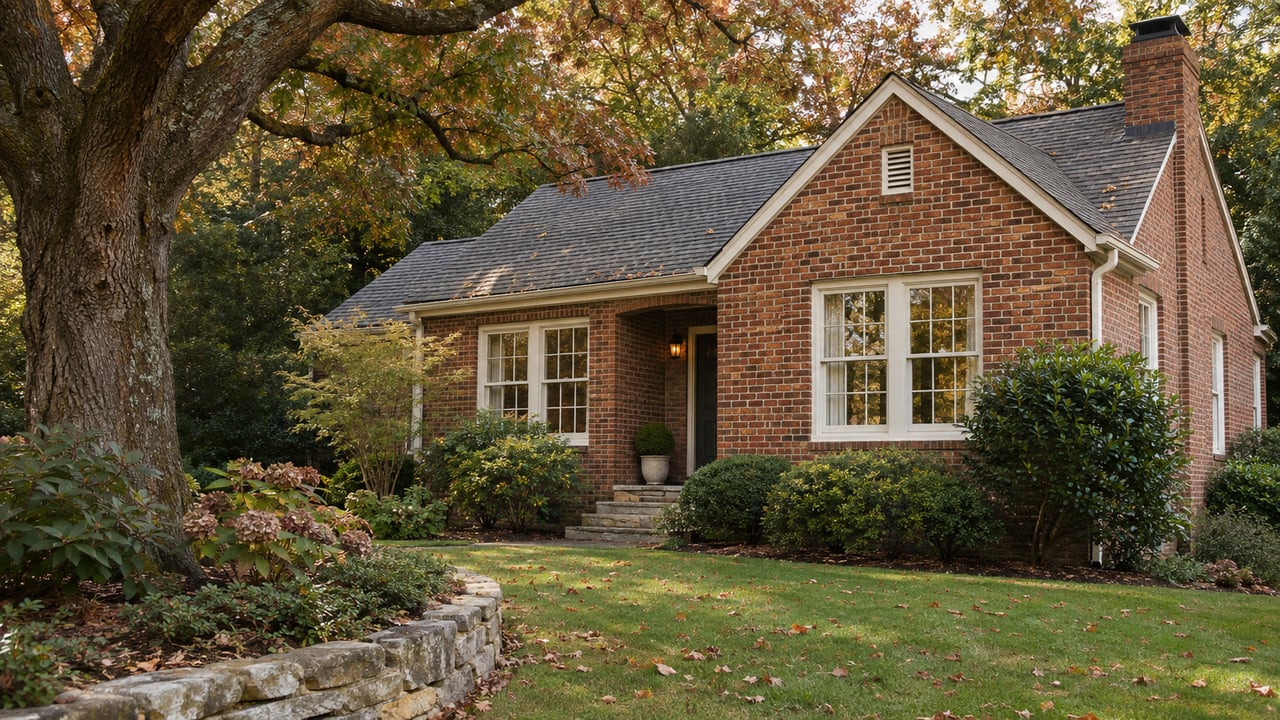
In November 2025, a few property owners in Green Hills East got their building permits issued just before Councilmember Jeff Preptit introduced overlay legislation for the neighborhood. According to the Nashville Scene, that filing triggered a permitting moratorium. The bill was withdrawn in May 2026, but the question it raised is still open.
That makes Green Hills East an unusual case in Green Hills. On these streets, the plan you hope to carry out may matter more to your budget than the house itself.
The Streets in Question
Green Hills East is the original Green Hills subdivision. The rest of the area takes its name from it, and Metro's Historic Zoning staff say its significance comes from a national effort, beginning in the late 1920s, to promote homeownership and teach people about modern materials and building methods. The proposed overlay covered about 124 parcels on 38 acres between Lipscomb, Shackleford and Glen Echo. Metro lists these streets:
- Green Hills Drive
- Bonner Avenue
- Eden Avenue
- North and South Observatory Drives
- Observatory Court
- Burton Avenue
The neighborhood's own draft history explains what prompted the effort. It says residents wanted to preserve the neighborhood as the market moved toward replacing smaller homes with "McMansions." That pressure is what puts teardowns and large additions at the center of the debate.
From Filing to Withdrawal
The legislative record runs about six months. Here is how Bill BL2025-1175 moved through Metro, based on Metro Council's legislative record and the Scene's reporting:
| Date | Step |
|---|---|
| January 28, 2025 | Metro holds a community meeting for owners on the affected streets |
| November 25, 2025 | BL2025-1175 is filed |
| December 4, 2025 | First reading at Council |
| December 17, 2025 | Historic Zoning Commission recommends the overlay |
| January 20, 2026 | Council defers the bill |
| April 23, 2026 | Planning Commission recommends withdrawal |
| May 7, 2026 | Council withdraws the bill |
The Nashville Scene reported that Preptit traced the withdrawal to mistakes in his own count of support and to problems with an earlier online survey. He told the Scene he was "withdrawing the legislation right now to make sure we have ample time and opportunity for community engagement and to clean up the legislative record." The Scene also noted that if he files again, the legislative process starts over from the beginning.
Metro's General Design Review Guidelines
Metro treats it as a rezoning that adds exterior design review on top of the zoning already in place. Metro's general conservation-overlay guidelines describe what that review covers:
- New construction: primary and accessory buildings
- Additions: any that expand a building's footprint, height or envelope
- Demolition: whole or partial
- Relocation: moving a building
- Setbacks: setback determinations
The Draft Standards for Rebuilds
The withdrawn bill came with draft design guidelines for Green Hills East. They never took effect, and they were written as guidance rather than fixed limits, but they show what the neighborhood was considering:
- New infill houses that should be one or one-and-a-half stories
- Primary exterior cladding that should be at least 80% brick or stone
- Design conditions on rear additions
- A 20-foot rear setback for a garage attached through a rear addition
The Historical Case for Designation
The Nashville Scene's longer report describes disputes over the historical case for designation. It also reports that Metro planned to review deeds and revise the history if the application were filed again.
Historic Zoning Commission Hearings
Metro describes how a Commission hearing works in this order:
- A complete application is submitted by the filing deadline
- Public notice goes out
- Staff analyze the project against the design guidelines
- The applicant presents
- The public comments
Metro's October 21, 2026 Commission hearing was canceled for lack of a quorum.
Where the Neighborhood Vote Stands
After the withdrawal, Preptit set up a neighborhood vote. The Scene reported that it would be overseen by a six-person steering committee, with three supporters and three opponents. Each home would get one vote, and he set his own 60% support threshold, which he said had no legal effect. His August 6, 2026 newsletter said ballots had gone out to affected owners and extended the return deadline to Friday, August 14.
On August 25, he postponed the results meeting and wrote in his council newsletter:
"I want to make sure that we have a verified vote count that is confirmed using multiple safeguards to ensure every voice is accurately accounted."
He said a new meeting would follow the week after Labor Day, once the results were verified. On the Metro Historic Zoning "In the Works" page, last updated September 24, 2026, the neighborhood is still listed as exploring an overlay. The page notes that seven meetings have been held and that Preptit plans a resident survey for the streets listed above.
Quick Answers
What happened to the proposed overlay? BL2025-1175 was withdrawn on May 7, 2026, and Metro lists the neighborhood as still exploring the idea.
How long does creating an overlay usually take? Metro's 2022 Historic Zoning handbook gives four to six months as a minimum starting estimate for the designation process. Green Hills East took longer than that from first community meeting to withdrawal.
This post is general information, not legal advice. If you're considering a purchase or a project on these streets, confirm how the rules apply to your property with Metro Historic Zoning and a qualified attorney.
If you're thinking about a Green Hills East home, Mandez Carter can help. If you already own on one of these streets, a home valuation is a good place to start. Let's Connect.
